
The Face and the Inner Self
The Man Who LaughsGwynplaine’s relation to his own face changes as he moves from accepted stigma to a brief claim on inherited identity.
increasing Bearing strength in each event
 decreasing
Bearing strength in each eventdecreasingThe Face He Cannot Recall
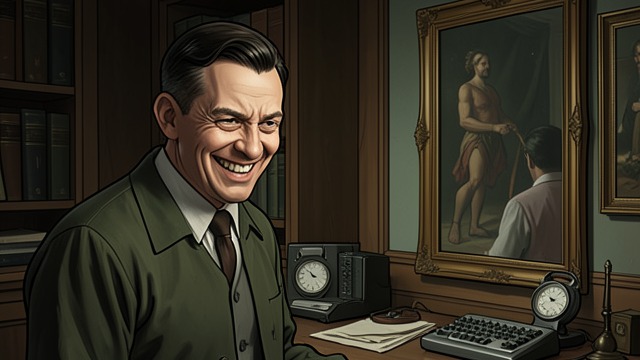
The Face He Cannot Recall
A missing memory
Gwynplaine has no clear memory of his original appearance.
Ursus discovers evidence that his features were deliberately altered.
The face he knows is not the face with which he was born.
Selfhood under a mask
He cannot compare himself with an intact past.
Others’ reactions teach him that his appearance is a social sentence.
The lack of memory makes the imposed face part of his identity.
A Face That Earns Bread
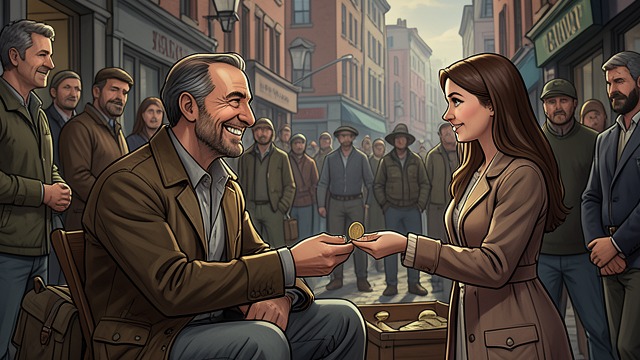
A Face That Earns Bread
Stigma made useful
Gwynplaine’s grin brings crowds and money to the troupe.
He uses the income to provide for Dea.
The face that isolates him also gives him material independence.
Acceptance with limits
He is grateful for his deformity because Dea loves him.
The public’s laughter does not make him feel understood.
His social usefulness remains tied to being looked at.
A Lord in Disguise
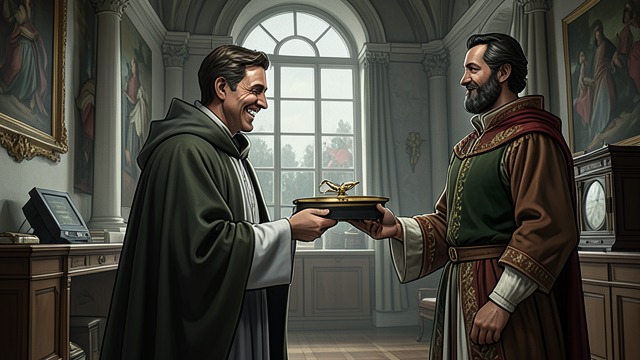
A Lord in Disguise
Clothes announce rank
Gwynplaine wakes dressed in fine clothes inside his inherited palace.
Servants and officials call him Lord Clancharlie.
His body has changed costume before his mind understands the change.
Recognition unsettles selfhood
He remembers the estate list from Ursus’s old van.
The titles are real, but the man inside them still feels like Gwynplaine.
The inherited identity complicates rather than resolves his sense of self.
A Mask Suppressed
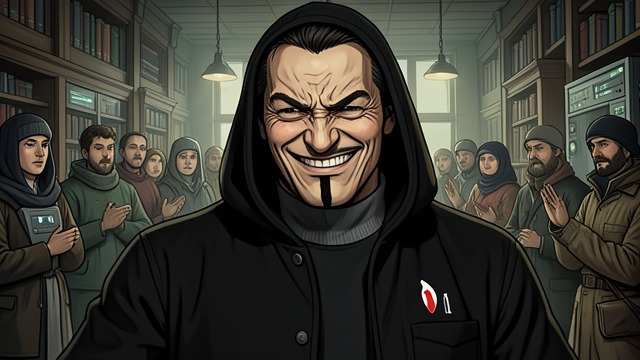
A Mask Suppressed
The will’s brief victory
Gwynplaine concentrates to hide the permanent grin.
His face becomes briefly severe and frightening.
The effort shows that his expression is both imposed and not wholly uncontrollable.
Emotion breaks through
He speaks from anger and compassion.
The grin returns at a moment of emotional force.
His body again contradicts the seriousness of his appeal.
The Man Beneath the Grin
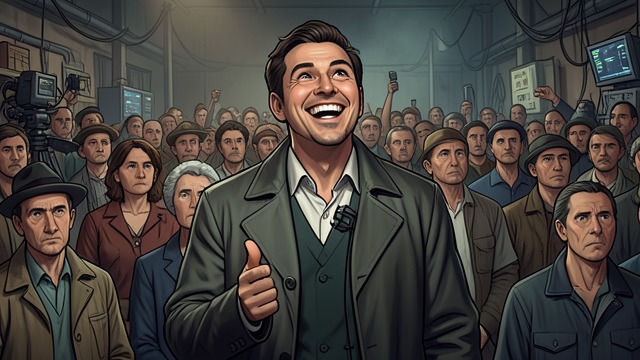
The Man Beneath the Grin
Inward truth asserted
Gwynplaine insists that laughter is the outward sign of pain.
He sees his face as an emblem of the people’s concealed suffering.
His identity becomes a protest against judging by appearance.
A divided fate
The lords see a clown where he claims to be a man.
His title cannot bridge the wall created by the face and his ideas.
The mask is both his evidence and his prison.
During Gwynplaine’s childhood with Ursus
During the Green Box’s successful touring years
During his arrival at Corleone Lodge
At the opening of the debate in the House of Lords
After the peers reject his speech
